

Machine Learning for Finance
Bridge finance and technology with practical machine learning expertise.
Explore finance-applied machine learning with industry insiders.
The University of Chicago’s eight-week Machine Learning for Finance course focuses on collecting, organizing, and using data to perform advanced financial analysis with algorithms and statistical techniques and tools. You will engage with real-world case studies and examples, allowing you to apply the theory you will learn to financial models.
$74 k
$43 b
15%
Course Modules
Statistics Review and Introduction to Python
Introduction to Probability
Introduction to Statistics
Introduction to Python I
Introduction to Python II
Introduction to Python III
Pandas
Exploratory Data Analysis and Linear Regression
Exploratory Data Analysis
Linear Regression
OLS Analysis
Regression Metrics
Advanced Linear Regression and Model Building
Bias-Variance Tradeoff
Model Testing
Model Validation
Feature Engineering
Regularization
Time Series Modeling
Time Series Data
Autoregressive Model (AR)
Moving Average Model (MA)
The ARIMA Model
Working with Time Series Data in Python
Advanced Time Series
GARCH/ARCH Models
Implementation of GARCH/ARCH
Analyzing S&P 500 Data
Classification, Unsupervised Learning, and Ensemble Methods
Supervised Learning
Classification Algorithms: K-Nearest Neighbors
Classification Algorithms: Logistic Regression
Classification Metrics
Unsupervised Learning
Ensemble Methods: Bagging, Random Forests
Ensemble Methods: Boosting
Risk and Portfolio Selection
Basics of Risk and Capital Allocation
Capital Allocation Decision: One Risky and One Risk-Free Asset
The Consumer's Preferences
Risk Aversion and Utility Values
Expected Return and Variance on a Portfolio of Two Risky Assets
Covariance and Correlation
A Trip to Monte Carlo
Advanced Concepts in Financial Analysis
Neural Networks: Starting Point
Neural Networks: Activation Functions and Vanishing Gradients
Big Data
Approaches to Big Data: Hadoop
Approaches to Big Data: MapReduce and Spark
After completing the course, you will be able to:
Apply statistics and probability concepts to finance.
Understand what exploratory data analysis is and how to perform it with Python and Pandas.
Engineer new features and functions from existing data.
Comprehend how unsupervised machine learning models work and when they can be useful.
Use simulation to solve portfolio risk and allocation problems and answer financial questions.
Pioneer data-driven strategies that enhance financial forecasting, risk assessment, and investment analysis.
This course is an excellent fit for:
CFOs and other senior finance leaders eager to drive data-centric financial strategies and lead digital transformation in their organizations.
Investors, venture capitalists, and portfolio managers looking to enhance risk assessment and optimize investment strategies using data-driven methodologies.
Consultants who want to integrate advanced machine-learning techniques into financial modeling and decision-making.
Diverse finance professionals interested in leveraging machine learning and predictive analytics to enhance financial performance and decision-making.
Analysts and data professionals looking to transition into finance or specialize in fintech, quantitative analysis, or financial risk modeling.
Past Participant Profiles
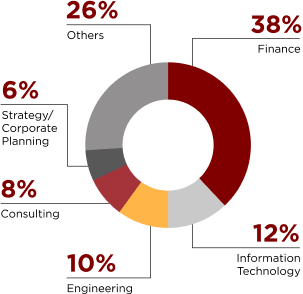
Diverse Functional Responsibilities
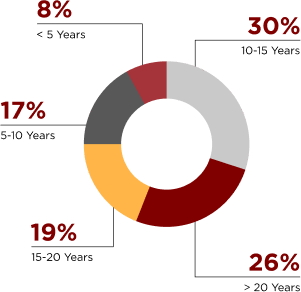
A Wide Range of Work Experience
Unique Program Features

Live Sessions

World-Class Instructors

Hands-On Learning
UChicago Credentials

Meet Your Instructor

Sourav Ghosh, MSc
Vice President at an Investment Bank

Lara Kattan, MPP
Clinical Assistant Professor of Operations Management
Student Feedback
Frequently Asked Questions
Are any taxes applicable to this program?
Applicable taxes will be calculated and added at checkout in accordance with country/state regulations.
Didn't find what you were looking for? Schedule a call with one of our Program Advisors or call us at +1 315 810 9499.
Home to 101 affiliated Nobel laureates, UChicago is where learners turn ideas into impact.
Starts on